
August 5, 2009
EMR Implementation Training and Computer Training
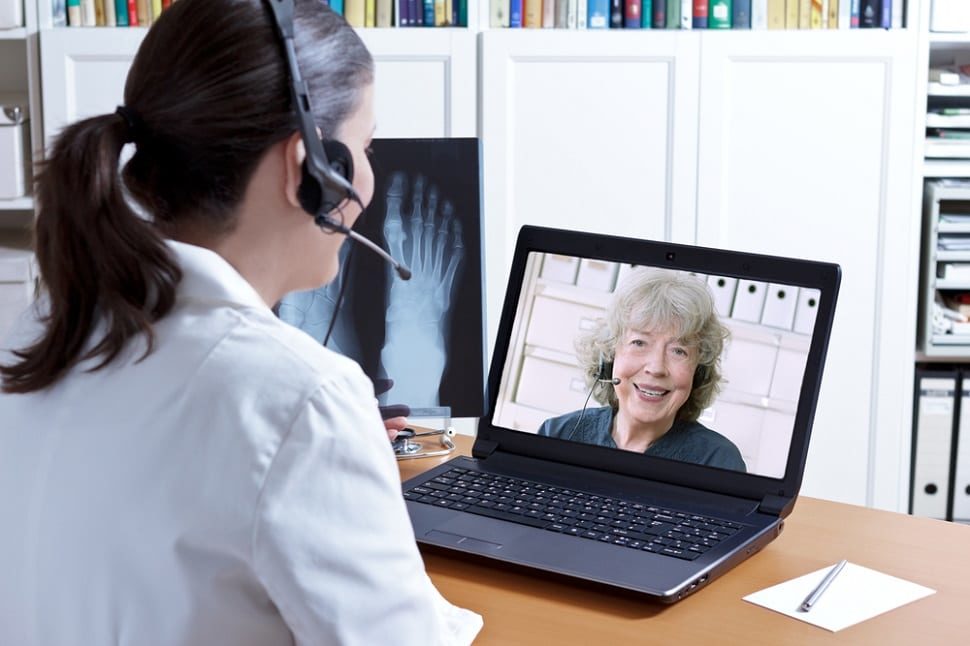
Written by: JohnWhen someone comes to my clinic to see our EMR implementation, they always ask “what lessons did you learn during your EMR implementation?” It’s inevitable, and obviously a good question. One of the answers I give the most is that I was surprised at how much of the initial training was on basic computers skills and not actual EMR software training.
On that note, I got an email from Michael Archuleta of ArcSys Inc. that described some of the challenges of training before an EMR implementation including training on some of the new technologies (see tablet, convertible, laptop and EMR discussion) that might be implemented with an EMR.
First, no two medical professionals are alike. They have been taught differently and see things through different lens.
Second, people have different computer skills. Some are very adept at tackling new technology, and others are easily intimidated.
Third, the flow of work or processes differs markedly from one group to another.
Regarding observation #1: People are best trained one-on-one. Each has their own terminology and it is best to talk the same “language” of medicine.
Regarding observation #2: The doctors and medical staff are best trained on desktop computers. They are, for the most part, familiar with the keyboard, mouse, and monitor. The hand-eye coordination is a known entity. In particular, knowing how to page up or down from the keyboard. Or, how to move the cursor back and forth across a line using the arrow keys. The monitors are large and they are accustomed to how things look. They are familiar with the location of icons on the desktop. They know how to start up applications and how to close down the pc. Thus, it becomes a really good idea to understand how the application works on hardware that you know. Once you are comfortable with the application, then you can advance to new hardware.
Now, contrast this with a tablet pc. The keyboard is smaller and this usually results in hunting for the location of familiar edit keys like page up, page down, arrows, end, and home. If you are trying to learn a new application and a new keyboard layout, your frustration will skyrocket.
The monitor is smaller. You are going to be spending more time squinting. It may be time to invest some time with the eye doctor and get some new corrective lenses. Again, if you are familiar with the application, you will not be visually hunting for tiny icons.
When using a laptop you will have to use either the touchpad, eraser head, or pen for your mouse. All three require an amazing amount of finger dexterity. If you can recall your initial learning curve with the mouse, multiply that by 10 and you will have an idea of what it will be like to re-learn your mousing skills with this new technology. My recommendation would be to get a regular mouse and plug it in the USB port. It is messy with an extra cord, but is one less thing to learn. Better yet, get a wireless mouse. But, then that is also one more piece of technology…
The desktop of the tablet pc will have different icons. It is a good idea to eliminate as many as reasonable. The hard part of any laptop is knowing how to configure it. A laptop is designed to work off of batteries and thus needs to conserve energy. It will go to “dim mode” when it senses the batteries are losing their charge. It will go to “blank mode” when it decides that you haven’t touched the keyboard in a long time. What you need to know is how to bring it back to life in these (and other) circumstances. Because of these types of quirks, if you are not familiar with the application, you will become extremely frustrated and discouraged.
Regarding observation #3: Baby steps. Implement only one automated procedure at a time. Don’t flood everyone with all the bells and whistles. Make certain that everyone understands a new automated procedure before launching the next one.
Tags: EHR Implementation • EHR Software • EHR Training • EMR Implementation • EMR Software • EMR training • Michael ArchuletaAugust 1, 2009
Marc Probst Talks About Meaningful Use
Written by: John- CCHIT Certification
- EHR
- Electronic Health Record
- Electronic Medical Record
- EMR
- HealthCare IT
- Meaningful Use
add to del.icio.us


A relatively new reader of EMR and HIPAA, Michael Archuleta, sent me his notes from the Utah Medical Group Managers Association 6/25/09 where the keynote speaker was Marc Probst. For those that don’t know, Marc Probst is the CIO of Intermountain Healthcare (IHC). IHC is huge in Utah and I think it does pretty well in a number of surrounding states as well. Plus, Marc Probst is also a member of the HIT Policy Committee. You may remember that I’ve talked about Marc Probst on EMR and HIPAA a few times before.
Anyway, I found some of the points that Michael captured interesting. I guess in the end I was interested to hear what Marc Probst was telling people. Michael Archuleta’s notes are as follows (published with permission and the emphasis added was mine to highlight some interesting parts):
Mark Probst – Intermountain Health Care – government wants to invest 42 billion in IT healthcare. IHC has 500,000 enrollees, 28,000 employees. 600 physicians. They are a unique integrated health care organization. Feels Obama framed the problem (related to health care, in previous nights TV pitch) well, and wants his plan in by Oct 09. Referred to how IHC is the lowest cost per capita.
Probst has met with 3 congressman and 20 government staffers. Using Mayo Clinic as a benchmark, could save 30 pct in chronic illnesses. There are 300,000 uninsured Utahns.
Four stages of an EMR. Third stage was commercial products. Stage four will have broad adoption of solutions. Second increased knowledge. Third is introduction of clinical decision support. A stage 3 EMR could save a 300 bed hosp at least 11M.
At LDS hospital there were 581 adverse drug events in 1990 and in 2004 there are only 270 . Their stats showed that waiting to 39 weeks (for OB delivery) was best for infants and reduced neonatal admissions. The docs said they knew this already and didn’t induce unnecessarily. But when showing them the data, they were in fact inducing. The same stats showed improved outcome with acute respiratory stress.
150 people are working on a new EMR system (for IHC) with GE and people from India. A complete clinical information system has automation (taking common tasks and automating it like voice, scanning, bar codes. Helps you with inventory management and pricing. Provides automated data entry with hot texting.), connectivity (using a network. Allows doctors to see and share information and this brings more specialists into the picture.), decision support (prompts and alerts for obvious things. Advanced decision support like glucose management and need to push the human mind.), data mining (using historical data to identify patterns and to test hypotheses).
Commercial systems were good at automation and connectivity but were weak on decision support. IHC was good in that area so they decided to build their own hybrid.
Rather than rip and replace, they aggregate, view, analyze, alert and then gradually replace existing systems.
The government HIT policy committee: Meaningful use says that to get money you need a certified system and have meaningful use. There must be a certification and an adoption. Must have the ability to do health information exchange. Time frames are aggressive: They originally thought they had until October to define requirements and then were told by the Obama administration that it was moved up to July 16. It will move from policy to a standards committee.
The intent and commitment of the people involved on the HIT committee is to do the right thing.
Questions from the floor: Doesn’t HIPAA preclude the ability to share information? In his opinion it allows for protection.
How do we get our voices heard? Have to get involved with AMA.
What is meaningful use? Capture discreet data like BMI, weight. Then there is an adoption process.
How will costs go down? If other things are in place, then we will minimize duplications. We may be connected but we can’t talk.
What about CCHIT? It is unclear what their role will be. IHC, for instance, is a hybrid of best of systems. Who would certify us?
Tags: HIT Policy Committee • IHC • Intermountain Healthcare • Marc Probst • Meaningful Use • Michael Archuleta • Utah Medical Group Managers Association